
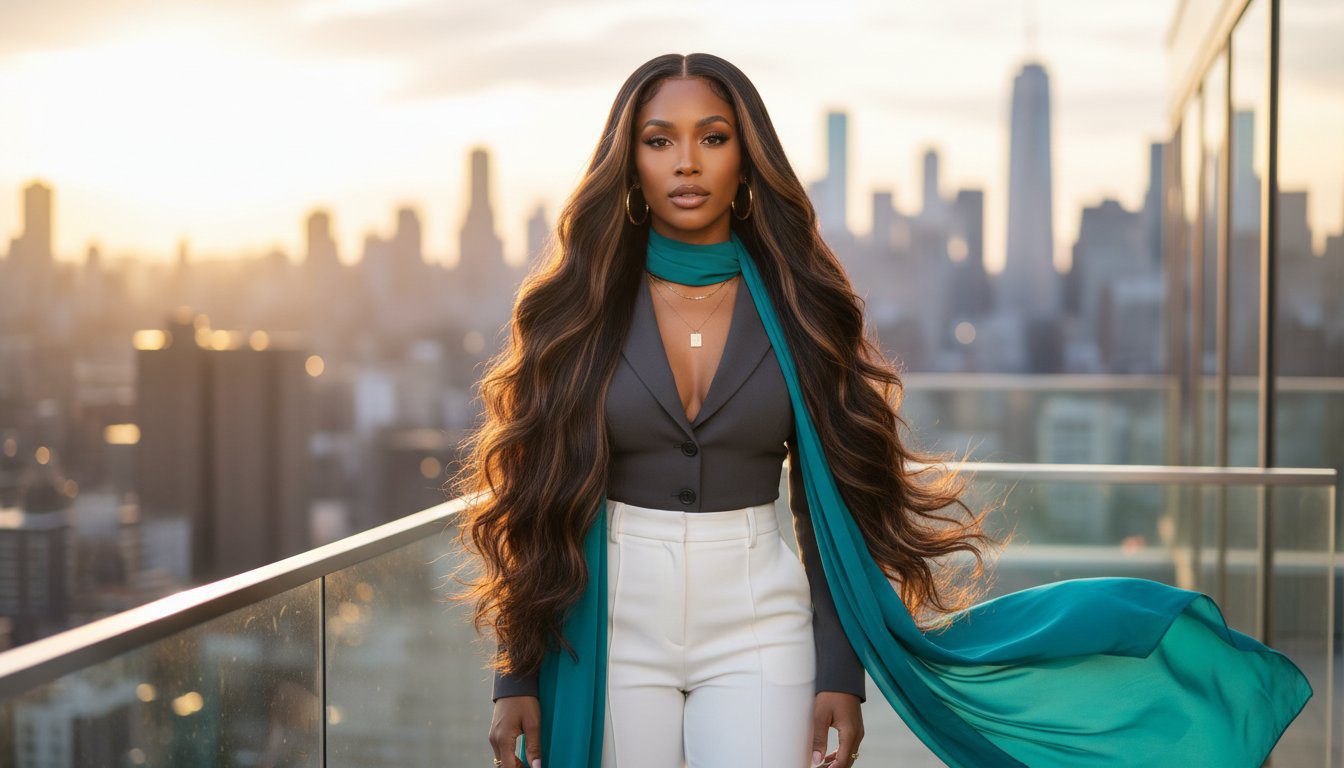
What if the most expensive hair investment you make this year actually becomes the one that saves you the most time on your Manhattan morning commute? While a full set of professional bonds in the city can range from $800 to over $2,500, the true value lies in their “set it and forget it” nature. At Hair Bar NYC, where a single pack of extension hair ranges from $106.00 to $160.00, we see many clients choose this method to escape the cycle of frequent salon visits. However, without a dedicated k-tip extensions maintenance nyc routine, your premium strands can quickly succumb to the stressors of an urban lifestyle.
If you’re ready to experience the most discreet hair enhancement available in Manhattan, book a consultation at any of our NYC or Miami locations today. Our licensed specialists will help you design a custom look that fits your lifestyle and hair goals; you can also learn more about Personalized Hair Color to see how professional colorists create the perfect foundation for high-end extensions.
Our expert stylists are trained in precision keratin fusion and are ready to help you maintain your look with the highest level of care. With convenient locations in Manhattan and South Florida—and expert studios like Salon 2120 Suites available for those in the Atlanta area—we provide the specialized knowledge and proprietary products needed to keep your hair thriving. You don’t have to guess about your hair’s health when you have professionals in your corner.
We understand the anxiety that comes with protecting such a significant investment, especially when it comes to preventing root matting and choosing the right products. This guide promises to help you master the art of preserving your K-tip extensions with expert, NYC-specific advice on washing, brushing, and professional upkeep. You’ll learn the exact rituals needed to ensure seamless, natural-looking hair and healthy growth for the full three to five month lifespan of your extensions.
Key Takeaways
- Learn the specific bottom-to-top brushing technique that prevents root matting and preserves the integrity of individual keratin bonds.
- Discover the essential 48-hour curing window and the tilt-back washing method designed to keep extensions from tangling or slipping.
- Understand why sleeping on wet hair is a major risk for mold and matting, and how simple nighttime braids can extend your hair’s lifespan.
- Master the professional timeline for k-tip extensions maintenance nyc, including why these strands require full removal and replacement every three to five months.
- Identify the exact sulfate-free products and keratin-safe rituals needed to protect your natural hair growth while wearing extensions.
Understanding the Keratin Bond: Why K-Tips Require Special Care
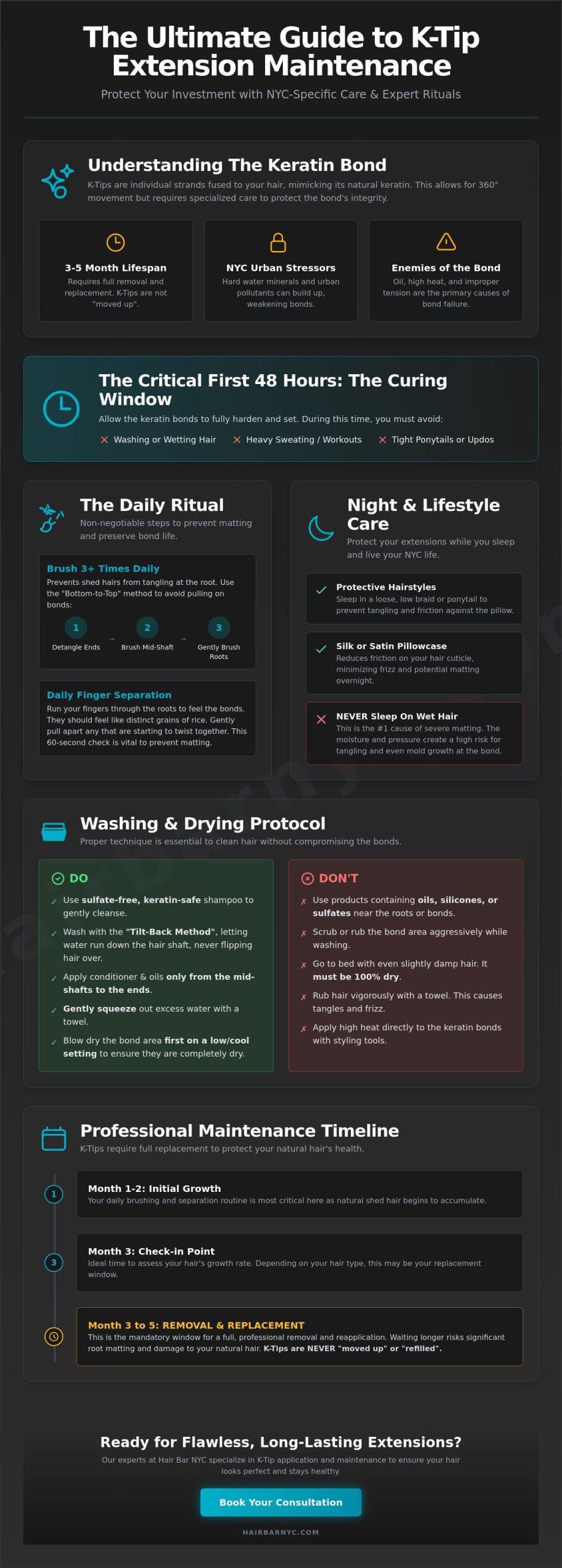
K-tip extensions, or keratin-tip extensions, represent the gold standard for anyone seeking the most natural movement and discretion. Unlike wefts or tapes that attach in wide sections, these are individual strands fused to your natural hair using a high-grade polymer bond. This bond is specifically engineered to mimic the keratin protein already found in your hair’s natural structure. Because each strand moves independently, you enjoy 360-degree rotation. This allows for high ponytails and intricate updos that other artificial hair integrations simply cannot achieve. However, this freedom requires a dedicated approach to k-tip extensions maintenance nyc. The very flexibility that makes them discreet also makes them vulnerable to specific environmental factors that can soften or degrade the bond over time.
Effective k-tip extensions maintenance nyc starts with recognizing the primary enemies of the bond. Oil, high heat, and improper tension are the three factors that most frequently lead to bond failure. While the bonds are durable, they aren’t indestructible. They require a delicate balance of hydration for the hair and a strictly dry, oil-free environment for the attachment point itself.
The Science of Keratin Fusion
The application process involves using either thermal heat or ultrasonic waves to soften the keratin tip just enough to wrap it securely around a small section of your natural hair. Once it cools, it forms a hard, crystalline seal. This seal must remain solid to prevent the extension from slipping. In New York, the high humidity levels during the summer months can be a hidden enemy. Excessive moisture in the air doesn’t just cause frizz; it can contribute to the softening of bonds if they aren’t kept clean and dry. Keeping the bond site free from oil is the most critical part of this science. Natural sebum or heavy oils found in generic hair products can act as a solvent, slowly breaking down that crystalline structure until the extension slides out prematurely.
NYC Urban Stressors and Your Extensions
Living in Manhattan or the surrounding boroughs introduces unique challenges that many generic care guides overlook. NYC’s water system often carries minerals like calcium and magnesium that can accumulate at the bond site. This mineral buildup can make the keratin bond brittle, eventually leading to shedding or even breakage of your natural hair. Urban pollutants and microscopic soot from the city streets also tend to cling to the bonds. These particles create unnecessary friction and tangling at the root if they aren’t regularly cleared away. To combat these stressors, you need a specialized keratin care shampoo that gently removes urban buildup without stripping the bond’s integrity. Regular cleansing with the right formula ensures that the city environment doesn’t shorten the lifespan of your premium extensions.
The Daily K-Tip Maintenance Ritual: Brushing and Detangling
Brushing is the single most critical factor in successful k-tip extensions maintenance nyc. While these extensions are designed for a “set it and forget it” lifestyle, the roots require intentional, daily attention to prevent matting. When natural hair sheds, it remains trapped within the keratin bond. If you don’t brush consistently, these shed hairs can wrap around neighboring bonds, creating a tangled web that’s nearly impossible to remove without damage. To keep your hair healthy, you must commit to brushing at least three times per day. This frequency is especially vital for NYC commuters who deal with wind tunnels between skyscrapers and the constant movement of the subway system.
To minimize scalp tension, always use the bottom-to-top method. Start by detangling the last two inches of your hair, then move up to the mid-shaft, and finally the roots. By the time you reach the keratin bonds, the lengths are already smooth, so the brush won’t catch and pull on the attachment point. While brushing, use your other hand to hold the hair in a ponytail grip just below the bonds. This supports the weight and ensures you aren’t putting unnecessary stress on your natural hair follicles.
In addition to brushing, you should perform a daily “finger-separation” check. Reach into your hair and feel the bonds. They should feel like distinct, separate grains of rice. If you feel any two bonds starting to twist together, use your fingers to gently pull them apart. This simple 60-second ritual prevents the dreaded matting that often occurs in the first few inches of hair growth. If you find your hair needs a professional refresh after a long week, a Signature Blowout can help reset your style while ensuring your bonds are perfectly detangled.
Choosing the Right Extension Brush
Boar bristle or specialized looped-bristle brushes are mandatory for anyone with K-tips. You must avoid standard ball-tip brushes at all costs. The tiny plastic balls at the end of traditional bristles are designed to massage the scalp, but they will catch on the edge of your keratin bonds and tear them away from your natural hair. A high-quality extension brush is designed to glide over the bonds without snagging. The ideal brush for K-tip longevity is a specialized loop brush or a natural boar bristle brush designed to slide over the bonds without snagging.
The Morning and Evening Detangling Routine
Your morning routine should focus on preparation for the city’s environment. After your finger-separation check and a thorough brush-through, consider your day’s activities. If you’re heading to a windy rooftop or a fast-paced commute, securing your hair in a loose braid or low ponytail can prevent “wind-matting.” The evening routine is equally vital for k-tip extensions maintenance nyc. Never go to bed with tangles. A final, deep brush-through ensures that any knots formed during the day are cleared before they have eight hours to tighten against your pillow. This ritual keeps the bonds aligned and ready for the next day’s styling.
Washing and Drying K-Tip Extensions Without Damage
The first 48 hours after your installation are the most critical for long-term success. During this window, the keratin bonds are still curing and reaching their final hardened state. You must follow a strict “no-wash” rule during this time to prevent the bonds from softening or slipping. Once this period passes, your washing routine becomes the foundation of effective k-tip extensions maintenance nyc. While it’s tempting to wash frequently to remove city grime, the sweet spot for most New Yorkers is two to three times per week. Over-washing can lead to premature bond breakdown, while under-washing allows oils to sit on the attachment points for too long.
When you do wash, your technique matters just as much as your products. Never wash your hair with your head flipped over a sink or bathtub. This “upside-down” position creates immense tension on the bonds and encourages the hair to tangle around the roots. Instead, use the “tilt-back” method in the shower, keeping your head upright and letting the water flow down the hair shaft. This keeps the strands aligned and minimizes the risk of matting at the scalp. Gently massage the shampoo into your scalp between the bonds using your fingertips, but avoid vigorous scrubbing or circular motions that can disturb the attachments.
Leaving your bonds damp for extended periods is a common mistake that can lead to “bond rot.” Keratin is naturally hydrophobic, meaning it repels water, but when it’s submerged or left wet for hours, it enters a hydrophilic state. In this state, the bond becomes slightly porous and soft. If this happens repeatedly, the bond will eventually crumble or slide off. Always prioritize drying the bond area immediately after your shower to maintain that necessary crystalline hardness.
Safe Cleansing and Conditioning Strategies
Using sulfate-free and paraben-free products isn’t just a suggestion; it’s a requirement. Sulfates are harsh detergents that can eat away at the polymer bonds over time. When applying conditioner, only work the product from the mid-shaft down to the ends. If conditioner touches the keratin bonds, the lubricating agents will cause them to slip right off your natural hair. For those who want their natural hair to match the sleek, frizz-free texture of their extensions, a Silk Touch Keratin Treatment can be performed on the natural hair before installation to ensure a seamless blend that’s easier to manage during your weekly wash.
The Art of the Gentle Dry
Air-drying is generally not recommended for K-tip wearers, especially at the roots. You should always use a blow dryer on a cool or medium heat setting to dry the bond area first. High heat can melt or warp the keratin, so keep the dryer moving and at a safe distance. Before you reach for the dryer, blot your hair gently with a microfiber towel. Don’t use a traditional terry cloth towel to “scrub” your hair dry, as the heavy loops can snag the bonds and cause unnecessary frizz. A gentle squeezing motion is all you need to remove excess moisture before finishing with a professional-grade blow dry.
Nighttime Care and NYC Lifestyle Protection
The “Never Sleep on Wet Hair” rule is the most important commandment for anyone wearing keratin bonds. If you go to bed with even slightly damp roots, you’re inviting a disaster that’s difficult to reverse. Moisture trapped between the bonds and the scalp creates a stagnant environment that can lead to mold growth and extreme matting. This isn’t just a minor tangle; it’s a structural threat to your natural hair health. Effective k-tip extensions maintenance nyc requires you to be disciplined about your evening routine, ensuring every bond is 100% dry before your head hits the pillow.
For those living the high-energy life in Manhattan, nighttime is when the most passive damage occurs. Tossing and turning on a traditional cotton pillowcase creates friction that can snag the bonds and roughen the hair cuticle. To combat this, always secure your hair in a low, loose braid or a soft ponytail at the nape of your neck. This keeps the individual strands from rubbing against each other and tangling at the root. Investing in a silk or satin pillowcase is a non-negotiable upgrade. These smooth surfaces allow the hair to glide effortlessly, preventing the tension that leads to premature shedding.
Sleeping Habits for Extension Longevity
Protecting your hairline is just as vital as protecting the bonds themselves. Many clients find success by tying a loose silk scarf around their head to keep the perimeter bonds flat and secure while they sleep. When securing your nighttime braid, always use a silk or satin scrunchie instead of a traditional elastic. Traditional hair ties have a high-friction surface that can create a permanent “kink” in the extension hair or put too much pressure on the attachment points. Sleeping on unprotected hair leads to friction-matting, where the hair fibers rub together and create knots that can eventually compromise the bond attachment.
Exercise and Urban Commuting
NYC is a city of movement. Whether you’re hitting a Barry’s class in Chelsea or a SoulCycle session in Tribeca, sweat is an inevitable part of the lifestyle. Sweat contains salt and natural oils that can slowly degrade the keratin polymer if left to sit. After an intense workout, don’t let the sweat dry into your hair. Use a blow dryer on a cool setting to dry the nape of your neck and the bond area immediately. If you’ve had a particularly heavy sweat session, a quick rinse of the bottom row of bonds with plain water helps remove salt buildup before it can cause irritation.
Commuting also presents unique challenges. If you’re navigating the streets on a CitiBike, be mindful of helmet tension. Ensure your helmet is adjusted so it doesn’t rub directly against the top row of bonds, which are the most visible. For more insights on choosing the right style for your active lifestyle, check out our guide on Hair Extensions NYC. If you feel like your bonds have shifted after a busy month of training, you should book a professional consultation to ensure everything is still perfectly aligned.
Professional Maintenance and the Hair Bar NYC Advantage
The final phase of k-tip extensions maintenance nyc is understanding that these are a high-investment, low-maintenance commitment. K-tips are different. They are a one-time wear system. Unlike tape-in extensions that require “move-up” appointments every six to eight weeks, K-tips are designed to be worn for a full three to five months. Once that time is up, they cannot be shifted closer to the scalp. The bonds must be professionally dissolved and the hair completely replaced with a fresh set. This distinction is vital for your budget and schedule. While the initial total cost in 2026 for hair and installation ranges from $800 to $2,500, you save significant time by avoiding those bi-monthly salon visits.
Professional removal is the only way to ensure your natural hair remains healthy underneath. Attempting to pull or dissolve the bonds at home will lead to severe breakage. A professional removal in NYC typically costs between $100 and $200. This small investment ensures that the bond-dissolving solution is applied precisely. The extensions then slide off without taking your natural strands with them. In New York, stylists must hold a Natural Hair Styling or Cosmetology license to perform these services, ensuring your removal is handled by a trained expert who understands tension management.
When to Visit Your NYC Stylist
Following the four-month rule is essential for preventing natural hair damage. As your hair grows, the bond moves further from the scalp. This creates a longer “lever” that can put too much weight on a small section of natural hair; this potentially leads to traction alopecia if left too long. You should watch for signs like excessive slippage or bonds that have become visible through your natural hair. Even if you aren’t ready for a full replacement, scheduling a signature blowout at the three-month mark allows your stylist to check the integrity of every bond while refreshing your look.
The Silk Touch Aftercare System
The longevity of your extensions depends heavily on the quality of the products you use at home. Generic shampoos often contain alcohols that can dry out the keratin polymer, causing it to crack. Our Silk Touch line is specifically formulated to support keratin-fusion bonds by maintaining the perfect pH balance. Because extension hair doesn’t receive natural oils from your scalp, it can become dry and brittle. Using a Deep Conditioning Mask once a week from the mid-shaft to the ends provides the necessary moisture to keep the hair soft and manageable. This targeted hydration ensures your investment looks as vibrant on day 100 as it did on day one.
If you’re ready to experience the most discreet hair enhancement available in Manhattan, book a consultation at any of our NYC or Miami locations today. Our licensed specialists will help you design a custom look that fits your lifestyle and hair goals.
Secure Your Investment with Expert NYC Care
Mastering the daily rituals of k-tip extensions maintenance nyc transforms a high-end investment into a seamless, long-term lifestyle choice. By sticking to a disciplined brushing routine, using the “tilt-back” washing method, and protecting your bonds from the friction of city life, you ensure your extensions remain undetectable for their full five month lifespan. The health of your natural hair relies on professional oversight and the use of pH-balanced products like our Silk Touch aftercare line. These steps prevent the matting and bond degradation that can occur in a busy urban environment.
Our expert stylists are trained in precision keratin fusion and are ready to help you maintain your look with the highest level of care. With convenient locations in Manhattan and South Florida, we provide the specialized knowledge and proprietary products needed to keep your hair thriving. You don’t have to guess about your hair’s health when you have professionals in your corner.
Ready to ensure your bonds stay perfect? Book Your K-Tip Extension Maintenance at Hair Bar NYC today. You deserve hair that looks as vibrant and healthy as the day it was installed.
Frequently Asked Questions
How often should I brush my K-tip extensions in NYC?
You should brush your extensions at least three times every day to maintain optimal hair health. The wind tunnels between Manhattan skyscrapers and high subway humidity can cause hair to tangle faster than in other environments. Using a specialized loop brush ensures you can reach the scalp without snagging the keratin attachments. Consistent brushing prevents the small knots that eventually lead to severe matting.
Can I use dry shampoo with K-tip extensions?
You can use dry shampoo, but you must apply it only to the natural hair between the rows of bonds. Never spray dry shampoo directly onto the keratin bonds themselves. The starch and alcohol in these products can dry out the polymer, making it brittle or causing it to crack. It’s a great tool for managing city oiliness, provided you keep the application focused on the roots away from the attachment points.
What happens if I leave my K-tip extensions in for longer than 5 months?
Leaving extensions in for more than five months significantly increases the risk of matting and natural hair breakage. As your natural hair grows out, the bond hangs on a smaller, weaker section of hair that cannot support the weight. This can lead to traction alopecia or permanent thinning. Proper k-tip extensions maintenance nyc requires a full removal and re-installation within the three to five month window to protect your scalp.
Is it okay to swim in the ocean or pool with K-tips while in Miami?
You can swim with K-tips, but you must take immediate precautions to prevent bond damage from chlorine or salt water. Before entering the water, soak your hair with fresh water and apply a leave-in conditioner to create a protective barrier. Rinse your hair thoroughly immediately after swimming to remove chemicals. For those visiting our Miami locations, using a Deep Conditioning Mask after a beach day is essential to restore hydration.
How do I prevent my K-tips from showing when I wear my hair up?
Preventing your K-tips from showing depends on the initial professional placement and your styling technique. Because these extensions offer 360-degree movement, they are the most discreet option for high ponytails or buns. When styling, leave a half-inch perimeter of natural hair around your hairline to act as a “curtain” that hides the bonds. A soft-bristle brush can help smooth your natural hair over the attachments for a seamless finish.
Can I use heat styling tools like flat irons on my K-tip extensions?
You can use flat irons and curling wands on the extension hair, but you must keep all heat sources at least two inches away from the keratin bonds. High heat will melt the polymer attachment, causing the extension to slip or fuse to neighboring strands. Always use a heat protectant on the mid-shafts and ends. Setting your tools to a medium temperature helps preserve the hair’s cuticle without risking the integrity of the bond.
Why are my K-tip extensions shedding more than usual?
Shedding is often caused by the natural breakdown of the bond due to oil accumulation or improper brushing. It’s normal to lose about 50 to 100 natural hairs per day, and these hairs will stay trapped in the bond until removal. However, if the extension strands themselves are falling out, it usually indicates that oily products or heavy conditioners have touched the keratin. Reviewing your k-tip extensions maintenance nyc routine with a stylist can help identify the cause of premature shedding.
What is the best shampoo for K-tip extensions available in NYC salons?
The best shampoo for maintaining these extensions is a sulfate-free formula like our Keratin Care Shampoo. This product cleanses the scalp and removes urban pollutants without using harsh detergents that weaken the polymer seal. It’s designed to keep the hair hydrated while ensuring the bond remains hard and secure. Pairing this with a Keratin Care Conditioner on the ends provides the balanced nutrition required for both your natural hair and the extensions.
Related posts
Best Hair Glaze for Shine NYC: The Professional Guide to Glass Hair in 2026
In a city that never sleeps, your hair shouldn't look tired; professional NYC glazes are tactical color-corrections, not just shiny topcoats. You've...
How to Prepare for Your Hair Extensions Appointment: The 2026 Pro Guide
Your hair extension success is only 50% about your stylist's technical skill; the other 50% depends entirely on the biological state of your hair the...
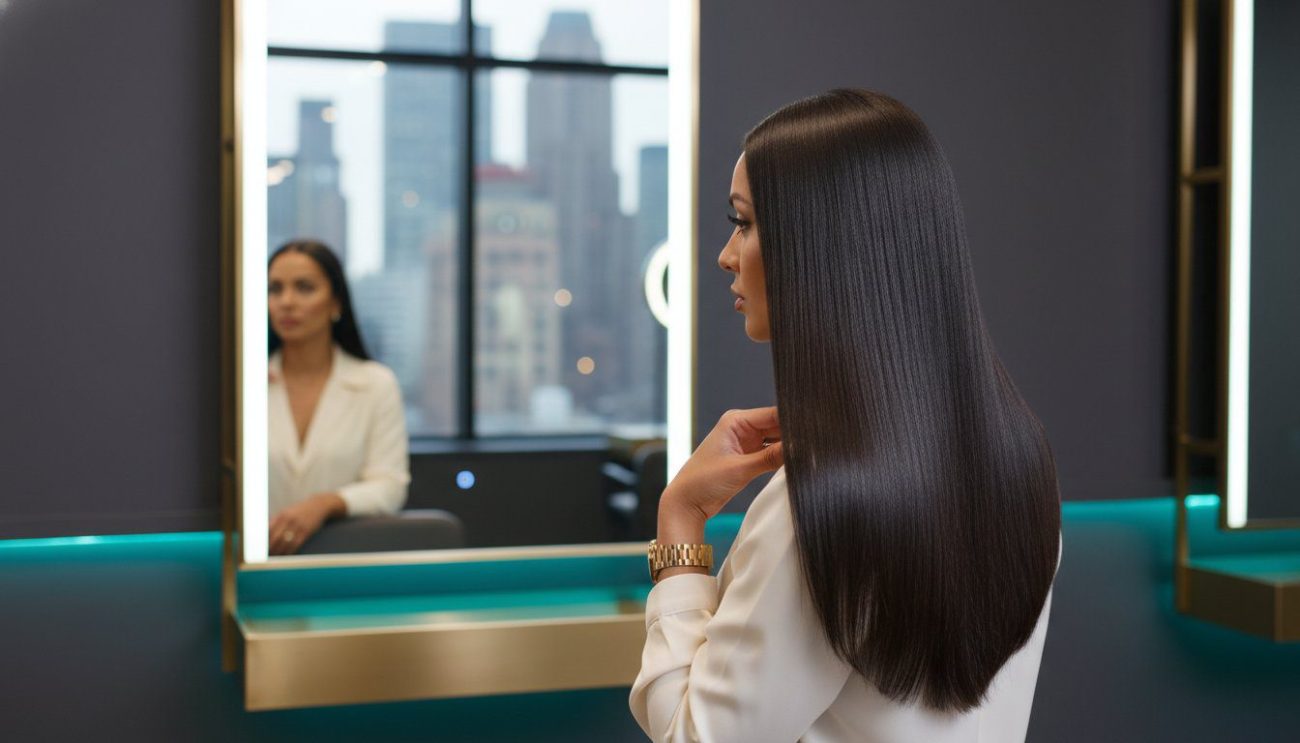
Best Blowout in Midtown NYC: The 2026 Guide to Salon-Quality Style
The most expensive blowout you can buy is the one that lasts less than two hours. While Manhattan is packed with high-volume bars offering quick...