
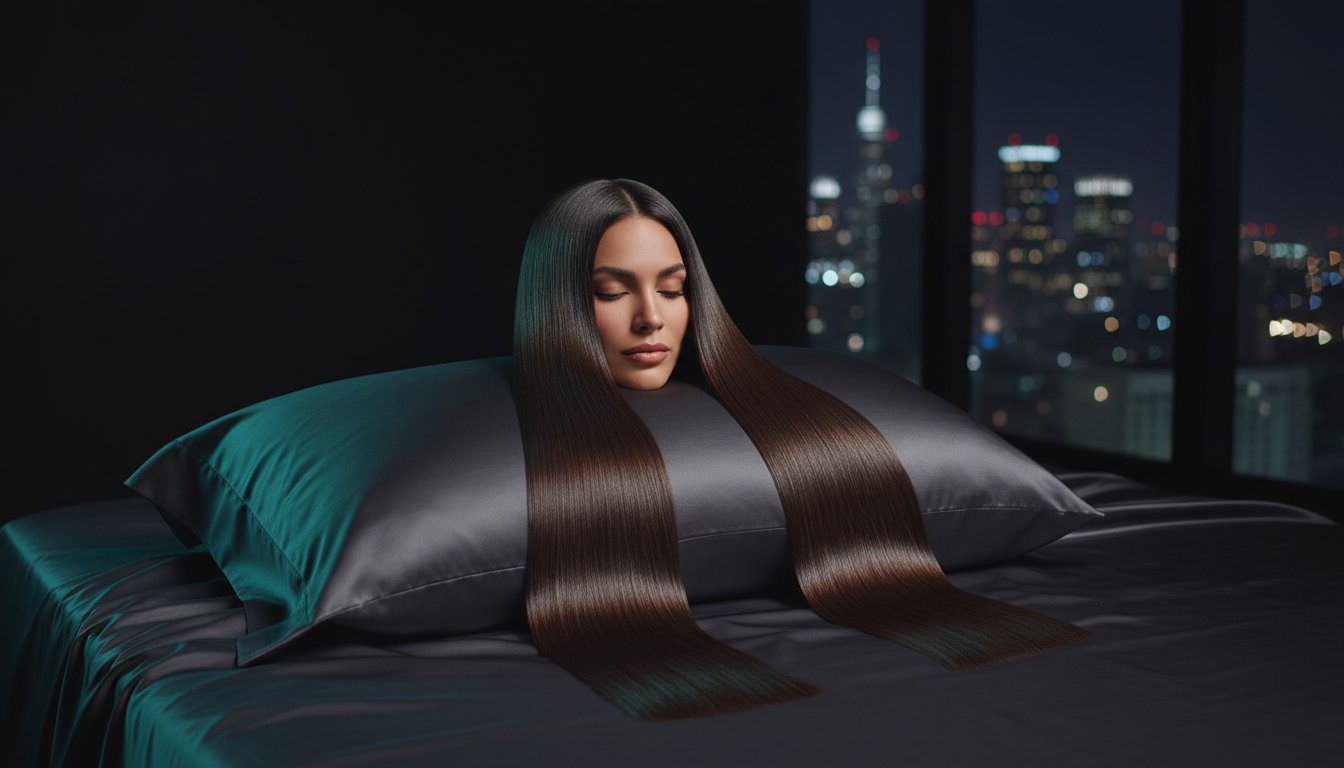
What if the biggest threat to your $500 hair investment isn’t the morning humidity, but the way you position your head on a pillow? You’ve just spent hours in the salon for a Silk Touch Keratin Treatment, yet the fear of waking up with a permanent crease is enough to keep anyone awake. Learning how to sleep after keratin treatment is essential because precision in the salon requires protection in the bedroom. Your sleep environment is effectively the final step of the professional application process.
It’s stressful to spend between $150 and $500 on a service only to worry that a single toss or turn will ruin the finish. With the price of hydrolyzed keratin rising by 9.8% in March 2026, protecting your salon results is more important than ever. This guide will help you master nighttime aftercare so you can protect your hair and wake up with flawless, frizz-free results. You’ll learn the exact steps to navigate the critical 72-hour bonding window, the best silk surfaces to use, and how to safely fix a sleep-induced kink without damaging your strands.
Key Takeaways
- Understand the critical 72-hour “malleable phase” when keratin is still curing and learn how to prevent external pressure from creating permanent creases.
- Master how to sleep after keratin treatment by switching to silk surfaces and avoiding the common “hair tucking” trap that ruins sleek results.
- Avoid all hair ties and compression wraps during the first 48 hours to ensure your blowout remains perfectly straight without structural kinks.
- Learn the professional “reset” protocol using low heat to safely eliminate any morning dents or nape-area hot spots before they become permanent.
- Transition safely to a long-term care routine using specialized sulfate-free and sodium chloride-free products to extend the life of your treatment.
The 72-Hour Bonding Window: Why Sleep Matters
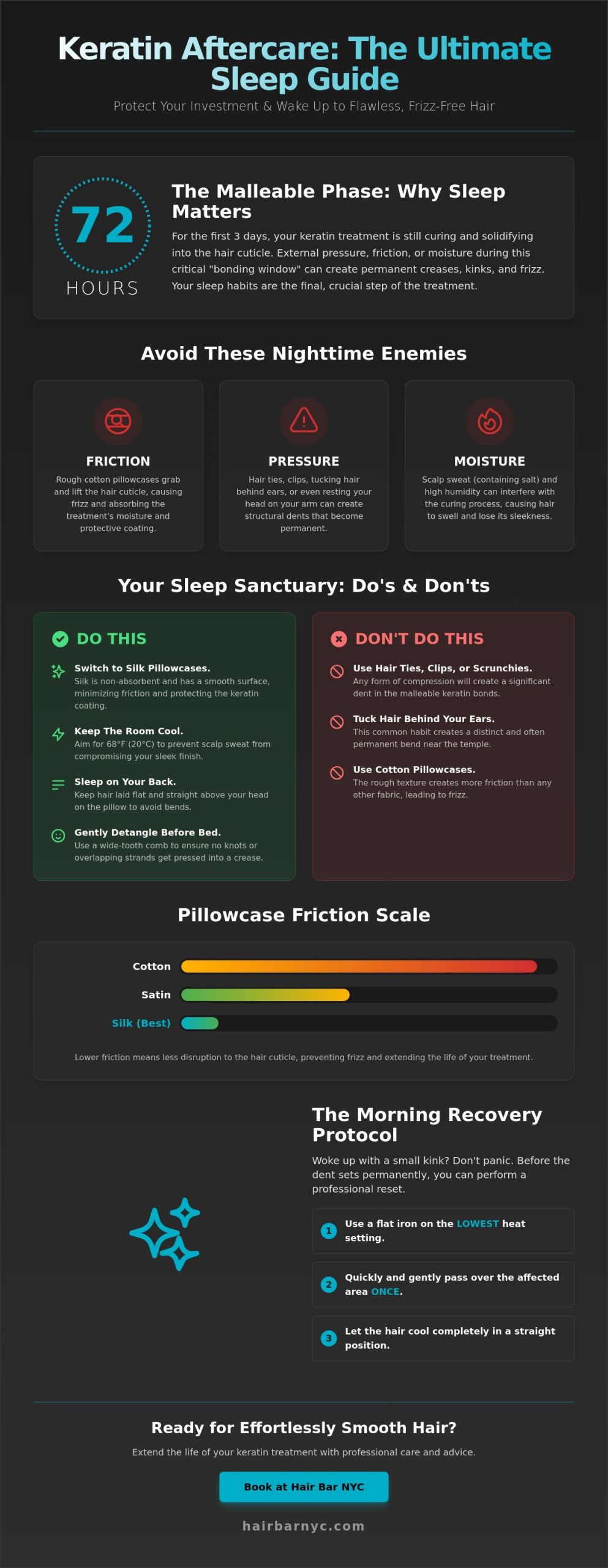
The first 72 hours are a high-stakes period for your hair. During this malleable phase, the treatment is still curing into the cuticle. Unlike a standard blowout that resets with water, a professional Brazilian hair straightening or keratin service involves a chemical restructuring that takes time to solidify. If you apply pressure by sleeping on your side or tucking your hair, you risk creating a permanent memory in the fiber. This is why knowing how to sleep after keratin treatment is vital. With the average salon cost reaching up to $500 in 2026, and the price of hydrolyzed keratin raw materials rising by 9.8% in March 2026, you can’t afford to let a bad night’s sleep ruin your investment.
External pressure is the primary enemy of a fresh treatment. When you press your head against a traditional pillow, you create heat and friction. This combination can mold the hair into unwanted shapes before the protein bonds have fully hardened. Common sleep-related pressures include:
- Heavy cotton pillowcases that pull on the hair cuticle and absorb moisture.
- Resting your head on your hands or arms, which creates localized heat.
- Using hair ties, clips, or even soft scrunchies that create dents in the protein bonds.
Silk Touch vs. Traditional Keratin: Curing Times
Traditional formulas often relied on harsh chemicals to lock in the shape immediately. Modern, formaldehyde-free options like the Silk Touch Keratin Treatment work differently by prioritizing hair health and structural integrity. The bonding window is the crucial 72-hour period where protein chains solidify. While some newer treatments claim you can wash your hair sooner, the safest bet for a long-lasting result is to respect the full three-day window. Friction from cotton pillowcases can disrupt these bonds, leading to frizz before the treatment even has a chance to set.
The Role of Humidity in NYC and Miami
If you’re in a coastal city like New York or Miami, the environment adds another layer of difficulty. Ambient moisture can re-activate the treatment while you sleep, causing the hair to swell and lose its sleekness. This is particularly risky during the first three nights when the hair is most vulnerable. High humidity levels, often exceeding 70% in Miami summers, can cause the hair to kink if it’s pressed against a warm pillow. Keeping your air conditioning on is your best friend during these first 72 hours. It helps maintain a dry, cool environment that allows the keratin to cure without interference from sweat or atmospheric moisture.
Optimizing Your Sleep Environment for Keratin Protection
Transforming your bedroom into a preservation zone is just as vital as the professional application itself. While the 72-hour bonding window is active, your primary goal is to minimize friction and moisture. Many clients unknowingly sabotage their results by falling into the “hair tucking” trap. Tucking your strands behind your ears while lounging or sleeping creates a localized pressure point. Because the protein bonds are still settling, this simple habit can leave you with a permanent bend that even a flat iron can’t fully erase. Instead, keep your hair flowing straight down from the scalp at all times.
Before your head hits the pillow, perform a thorough detangling session. Use a wide-tooth comb to ensure there are zero overlapping strands or knots. This ensures that the weight of your head is distributed evenly across the hair shaft rather than crushing a tangled clump into a crease. Keeping your bedroom temperature low is another professional secret. Scalp sweat contains salt and moisture, both of which can prematurely dissolve the keratin coating. Setting your thermostat to a cool 68 degrees Fahrenheit prevents nighttime perspiration from compromising your sleek finish. Understanding keratin treatment safety and aftercare is the best way to ensure your hair remains healthy and vibrant throughout this process.
Silk vs. Satin vs. Cotton: The Friction Scale
The fabric you choose dictates the longevity of your treatment. Standard cotton pillowcases act like velcro for fresh keratin. The rough fibers of cotton grab the hair cuticle, causing it to lift and frizz as you move. Satin is a better alternative, but high-momme silk remains the professional gold standard. Silk is naturally non-absorbent, meaning it won’t strip the essential oils or the keratin coating from your hair. In the 2026 hair care market, which is now valued at over USD 1.8 billion, silk accessories have become an essential component of professional maintenance.
The ‘Straight-Up’ Positioning Technique
Mastering how to sleep after keratin treatment requires a specific physical posture. Sleeping on your back is the only way to ensure your hair isn’t crushed between your face and the pillow. Use the “straight-up” technique by gently fanning your hair upward and over the top of the pillow. This move keeps your strands away from your neck and shoulders, preventing body heat and sweat from “re-setting” the hair into a wavy pattern. If you find yourself struggling to maintain this position, a silk headband worn loosely around the forehead can help keep hair directed upward without applying any downward pressure. If you’re ready for a professional touch, you can always book a Silk Touch Keratin Treatment to experience the ultimate in frizz-free technology.
Nighttime ‘No-Go’ Habits: Common Mistakes to Avoid
Success with your hair doesn’t just come from what you do; it comes from what you avoid. Many people assume that a silk scrunchie is a safe way to keep hair out of their face, but the “No-Tie” rule is absolute for the first 48 hours. Even the softest silk tie creates a localized pressure point. Because the keratin is still curing, this pressure acts like a mold, leaving a physical indentation in the hair shaft. Don’t risk it. If you’re wondering how to sleep after keratin treatment without hair in your face, the answer is to let it hang completely free. Any restriction, no matter how gentle it seems, can compromise the smooth finish you just paid for.
Another common mistake is the use of hair bonnets or wraps. While these are usually great for protecting styles, compression is the enemy of a fresh treatment. A bonnet traps your natural body heat and forces the hair into a cramped, curved shape. In a global keratin market valued at USD 1.8 billion in 2026, many products are designed for maintenance, but they aren’t meant for the initial bonding phase. Similarly, avoid the habit of sleeping with your hand tucked under your head. This creates a “frizz zone” where heat and moisture from your skin are trapped against the hair, causing the protein bonds to swell and kink before they can set.
The Danger of Nighttime Perspiration
Scalp sweat is essentially a saline solution that acts as a mini-wash for your hair. Salt is highly abrasive to a new keratin seal and can cause the treatment to break down prematurely. This is a significant concern for residents in high-heat areas. If you’re living in a humid climate, maintaining a cool environment is non-negotiable. Keeping your hair dry and cool ensures the protein chains solidify correctly. For those who want to maintain that crisp look, check out this guide on Signature Blowout NYC & Miami for professional tips on keeping your hair salon-perfect in coastal humidity.
Skincare and Hairline Protection
Your nighttime beauty routine can also pose a threat. Face creams, heavy oils, and serums can easily migrate from your skin to your hairline while you sleep. These products often contain ingredients that can interfere with the curing process. If you must wash your face, use a silk headband to keep hair back only during the process, then remove it immediately. Also, be wary of the steam from a hot shower before bed. Even if you don’t get your hair wet, the high humidity in a bathroom can “re-activate” the malleable keratin, leading to unwanted morning waves. Keep your skincare light and your hair far away from any moisture sources during these first three nights.
The Morning Recovery Protocol: Fixing Sleep Dents
Even with the best preparation, accidents happen. You might wake up on Day 2 and find a slight wave where your head rested or a kink at the nape of your neck. Don’t panic. The Morning Recovery Protocol is designed to reset the hair before the protein bonds fully solidify. Start with an immediate inspection of your “hot spots.” These are typically the hairline and the back of the head where body heat is highest. Identifying these areas within the first 20 minutes of waking up is the secret to mastering how to sleep after keratin treatment without long-term damage.
Once you’ve spotted a dent, use a hair dryer on a low-heat setting. Gently direct the airflow down the hair shaft to warm the protein bonds without scorching them. If the wave persists, you’ll need to apply a professional flat iron. Follow the 365°F Rule; never exceed this temperature on fresh keratin, as excessive heat can yellow the treatment or cause structural damage. Swipe the iron over the crease in one fluid motion. Finish by hitting the “Cool Shot” button on your dryer for 30 seconds. This rapid temperature drop “freezes” the hair in its straightened state, locking the sleekness back in immediately.
When to Use Heat vs. When to Leave It Alone
Distinguishing between a minor surface wave and a deep structural crease is key. If it’s just a light bend from your pillow, a quick blow-dry usually suffices. However, you must never use water to fix a sleep dent during the first 72 hours. Water will break the temporary bonds and cause the hair to frizz instantly. The ‘Cool Shot’ button is your most powerful tool here. It ensures that once you’ve straightened the hair, it stays that way by closing the cuticle and sealing the protein layer.
The Emergency Kit for Keratin Maintenance
Keep a small emergency kit on your nightstand for those first three nights. This should include a wide-tooth comb and a professional-grade flat iron with adjustable digital temperature settings. Professional tools provide more consistent heat distribution than cheaper drug-store versions, which often have hot spots that can burn the hair. For a deeper look at long-term care and professional techniques, read our Hair Straightening Treatment Guide. If you’ve encountered a crease you can’t fix at home, book a professional touch-up to ensure your results stay flawless and straight.
Beyond the First Night: Long-Term Keratin Maintenance
Passing the 72-hour mark is a major milestone for your hair. Once the bonding window closes, you can finally relax your posture and stop worrying about every toss and turn. However, while the immediate danger of permanent creasing has passed, knowing how to sleep after keratin treatment remains relevant for the long-term health of your strands. Transitioning from “protection mode” to “maintenance mode” after Day 4 means shifting your focus toward preserving the protein seal. The global keratin market is projected to reach USD 2.73 billion by 2034, highlighting a massive shift toward professional hair preservation. To ensure your $150 to $500 investment lasts the full 3 to 5 months, your nighttime routine should focus on moisture retention and cuticle strength.
Choosing the Right Aftercare Products
Generic “sulfate-free” labels often fall short because they don’t account for sodium chloride. Salt is a common thickening agent that acts as an abrasive, essentially “scrubbing” the keratin coating off your hair with every wash. For a Silk Touch Keratin Treatment, you need a specialized Keratin Care Shampoo and Keratin Care Conditioner. These products are formulated to reinforce the hair’s protein chains while you sleep. Applying a Deep Conditioning Mask once a week is also vital. This treatment provides a surge of hydration that prevents your pillowcase from wicking away essential oils. You can browse these professional-grade formulas at Hair Bar NYC Products.
Maintaining the NYC/Miami Glow
Environmental factors in coastal cities like New York and Miami can accelerate the wear of your treatment. Even after the initial curing phase, high humidity can cause the hair shaft to swell. As the treatment ages, usually around the 8-week mark, you might notice slight frizz returning on particularly muggy nights. Continuing to use a silk pillowcase is a smart move, but adding a monthly glaze or toner treatment can help bridge the gap between major sessions. Most professional stylists recommend a full refresh every 12 to 16 weeks to maintain that signature shine. When it’s time for your maintenance appointment, book your next Silk Touch session at Hair Bar NYC to keep your hair flawless and manageable.
Secure Your Sleek Results for Months to Come
Your journey to frizz-free hair doesn’t end when you leave the salon chair. By respecting the 72-hour bonding window and swapping your cotton pillowcase for high-momme silk, you ensure the protein chains solidify perfectly. Mastering how to sleep after keratin treatment is the final step in protecting your investment. If you wake up with a minor kink, remember the 365°F rule and use a “cool shot” to lock in the straightness. These simple adjustments to your nighttime routine will keep your hair looking professional and polished for up to 5 months.
At Hair Bar NYC, we’ve spent over 10 years specializing in advanced hair smoothing. Our proprietary, formaldehyde-free Silk Touch Keratin Treatment is designed for maximum safety and shine. With expert stylists across NYC, Miami, and Boca Raton, we provide the precision your hair deserves. Don’t leave your results to chance. Book Your Silk Touch Keratin Treatment at Hair Bar NYC today and wake up every morning with the effortless hair you’ve always wanted. Your dream hair is only one appointment away.
Frequently Asked Questions
Can I sleep on my side after a keratin treatment?
You should avoid sleeping on your side for the first 72 hours. Sleeping on your back is the best way to ensure your hair stays flat and straight while the protein bonds are still curing. Side sleeping presses the hair against your face and pillow, creating localized heat and pressure that can lead to permanent creases in the malleable keratin layer.
What happens if I sweat in my sleep after keratin?
Sweat contains sodium chloride, which acts as an abrasive that can prematurely dissolve the keratin seal. If you wake up with a damp scalp, use a blow dryer on a cool or low-heat setting immediately to remove the moisture. This is a critical part of how to sleep after keratin treatment in humid climates like Miami or NYC, where nighttime perspiration is more common.
Do I really need a silk pillowcase for my keratin treatment to last?
Yes, a silk pillowcase is a necessary investment for maintaining your results. Silk reduces friction by approximately 40% compared to traditional cotton, which has rough fibers that can snag the hair cuticle. Since the personal care segment accounted for 45.4% of the keratin market in 2024, the industry has prioritized silk accessories as a standard component of professional aftercare routines.
How do I fix a crease in my hair from sleeping?
Fix a sleep-induced crease by using a flat iron set to exactly 365°F. Do not apply water to the area, as moisture will cause the hair to frizz before the bonds have fully set. Gently run the iron over the kink once or twice to reset the protein chains, then use the cool shot button on your hair dryer to lock the straightness back into place.
Can I wear a silk bonnet to sleep after keratin?
Avoid wearing a silk bonnet during the first 72 hours after your service. While bonnets are excellent for long-term maintenance, they compress the hair into a curved shape during the critical bonding phase. For the first three nights, your hair needs to remain completely free and straight to ensure the treatment sets without any structural waves or indentations.
Is it okay to sleep with my hair in a loose braid after the first 72 hours?
Yes, you can safely sleep with your hair in a loose braid once you’ve passed the 72-hour mark. By day four, the keratin has fully solidified into the hair cuticle, meaning temporary styling won’t create permanent marks. Use a silk scrunchie to secure the end of the braid to prevent mechanical damage and keep the hair organized throughout the night.
What should I do if my hair feels greasy on the second morning?
If your hair feels oily or heavy, you must wait until the full 72 hours have passed before taking action. That “greasy” sensation is often just excess product that hasn’t fully absorbed into the hair shaft yet. Resist the urge to wash it early; the first rinse on day four will remove the residue and leave your hair feeling light and silky.
Can I use dry shampoo before bed to prevent oil buildup?
You should not use dry shampoo during the initial 72-hour curing period. The starch-based powders in dry shampoos can interfere with the protein bonding process and may cause the treatment to look dull. After the first three days, you can resume using sulfate-free dry shampoos to manage oil levels between your regular cleansing cycles with keratin-safe products.
Related posts

Silk Touch Keratin vs. Brazilian Blowout: Which Smoothing Treatment is Best for 2026?
As of July 1, 2026, the hair smoothing landscape in Florida has shifted permanently with the strict new ban on formaldehyde-added cosmetics. If...

How Long Does a Keratin Treatment Last? The 2026 Guide to Silk Touch
You spend hours in a stylist's chair, only to watch your hair expand the moment you step into the NYC humidity or a Miami afternoon. It's the...

Formaldehyde-Free Keratin Treatment: The Ultimate Guide to Safe Smoothing (2026)
What if you could survive a humid July afternoon in NYC or Miami without your hair expanding the moment you step outside? For a long time, the price...