
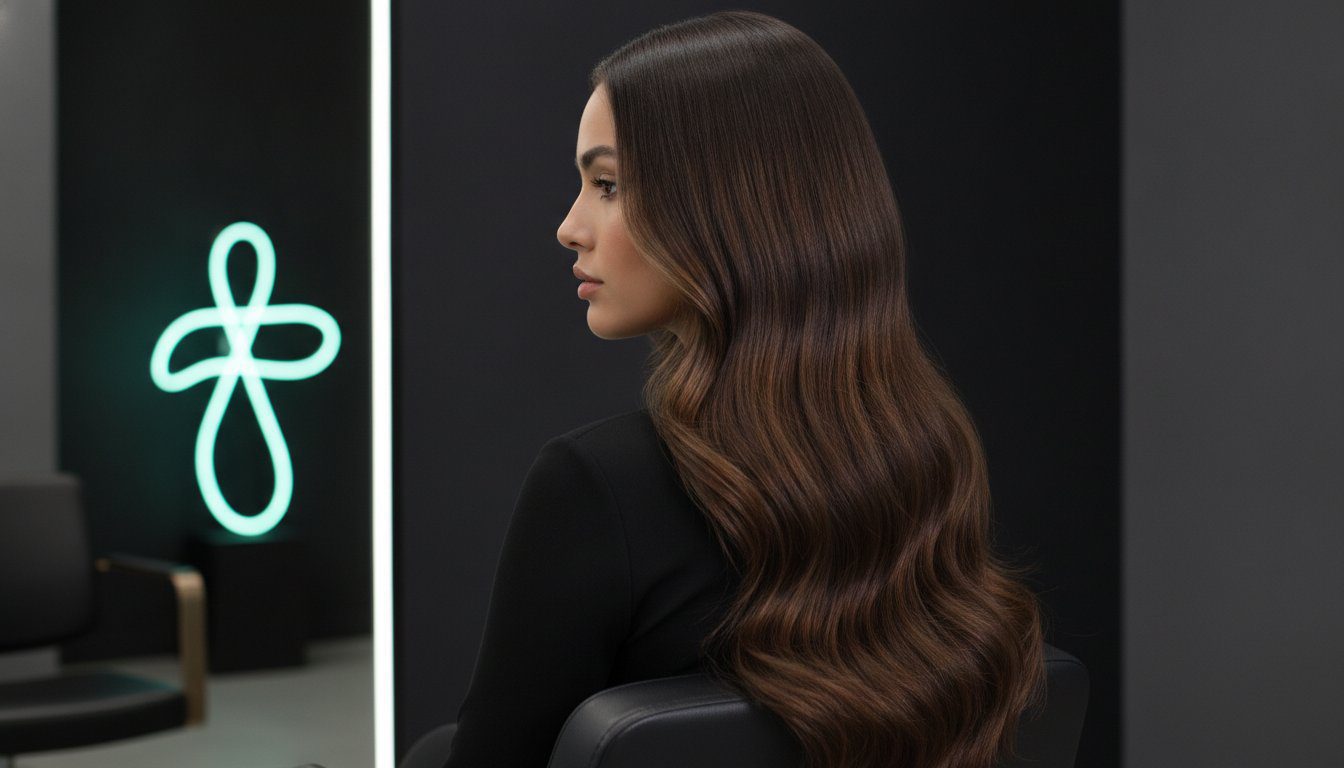
What if you could finally achieve the thick, flowing hair of your dreams without anyone noticing where your natural strands end and the extensions begin? If you have fine hair, you’ve likely spent years worrying about visible bonds or the heavy weight of traditional methods causing damage. It’s a common anxiety, especially when you’re looking for a solution that stays flat against the scalp and feels weightless. Understanding the tape-in extensions pros and cons is the first step toward making an informed decision for your hair health.
We understand that you want natural-looking volume and length that lasts for six to eight weeks without compromising your own hair’s integrity. This article provides an honest look at the advantages and drawbacks of this popular semi-permanent method. We will cover everything from the application process to the essential maintenance routine required to keep your style looking fresh. By the end, you’ll know exactly if tape-ins are the right fit for your lifestyle and hair goals.
Key Takeaways
- Learn how the “sandwich” technique uses medical-grade adhesive to bond 100% Remy human hair wefts to your natural strands for a seamless look.
- Understand why the flat-laying design and quick 60 to 90 minute installation time make this method a favorite for those seeking immediate volume.
- Weigh the tape-in extensions pros and cons to see if you are prepared for the 48-hour moisture rule and specific product restrictions required for longevity.
- Discover how to maintain your hair’s health by using sulfate-free Keratin Care Shampoo and specialized brushing techniques.
- Find out why a professional consultation and precision cutting are vital for ensuring your extensions blend perfectly with your natural hair.
Understanding the Tape-In Extension “Sandwich” Method
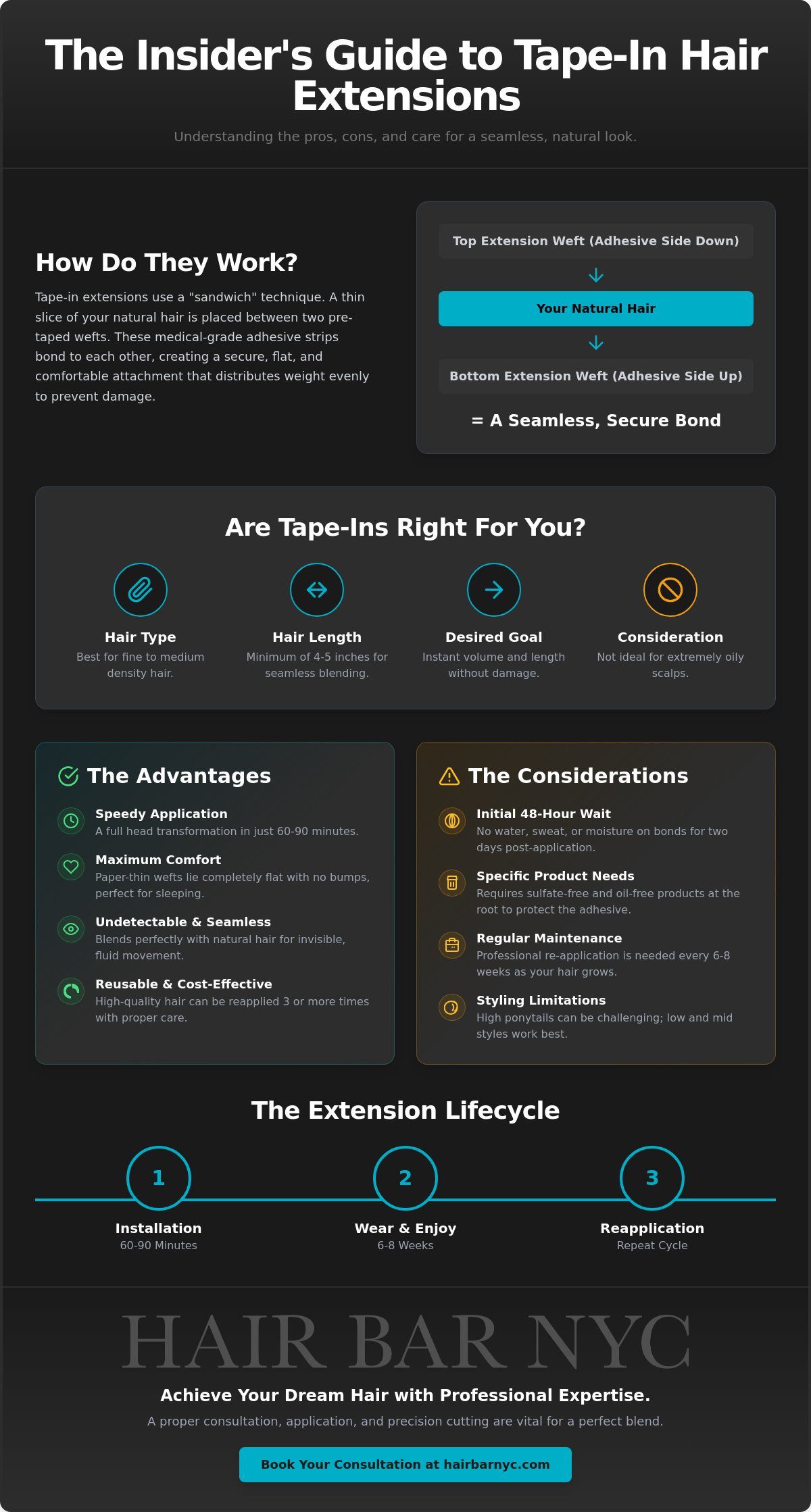
Tape-in hair extensions are a semi-permanent solution that uses pre-taped wefts made from 100% Remy human hair. This specific hair quality is vital because it means the cuticles are kept intact and face the same direction, which prevents matting and allows the extensions to blend with your natural texture. The process relies on a technical “sandwich” technique. During a professional application, a stylist places a thin section of your natural hair between two adhesive wefts. These two strips bond to each other, not just your hair, creating a secure hold that stays in place for weeks.
The adhesive itself is a medical-grade tape. It’s formulated to be hypoallergenic and water-resistant while remaining gentle on the hair cuticle. This is a critical distinction from lower-quality DIY kits that often use harsh glues. When considering tape-in extensions pros and cons, the way the weight is distributed is a major advantage. Traditional methods like K-tips attach to tiny points of hair, which can cause tension. In contrast, tape-ins spread the weight across a wider section of the scalp. This reduces the risk of traction alopecia and makes them feel much lighter during daily wear.
How Tape-Ins Differ from K-Tips and Wefts
The primary difference between tape-ins and other methods is the shape of the bond. K-tips use a small, cylindrical keratin bond that can sometimes be felt when you run your hands through your hair. Tape-ins are designed to be paper-thin and lie completely flat against the head. This makes them the most undetectable method available, especially for people with very fine hair. Speed is another factor. You can get a full transformation in about 60 to 90 minutes. Hand-tied wefts or individual bonds often require three to five hours in the salon chair. If you value your time but still want a high-end result, the efficiency of tape-ins is hard to beat.
The Best Candidate for Tape-In Extensions
While versatile, these extensions are the perfect match for fine to medium hair textures. The flat bonds won’t poke through thin strands, providing a seamless look that other methods struggle to achieve. However, your scalp chemistry matters. If you have an extremely oily scalp, the natural oils can break down the adhesive faster than usual. A professional stylist will use a clarifying treatment before the Tape-In Hair Extensions application to remove any residue. You should also have at least four to five inches of natural hair. This length provides enough “coverage” to hide the tapes when you move your head or tie your hair back. Balancing these tape-in extensions pros and cons ensures you get the volume you want without the stress of visible bonds.
The Pros: Why Stylists and Clients Love Tape-Ins
When you weigh the tape-in extensions pros and cons, the immediate comfort is often the deciding factor. Because the wefts are only about 1.5 inches wide and paper-thin, they lie perfectly flat against the scalp. This design eliminates the “bumpy” texture often associated with beaded rows or keratin bonds. For side-sleepers, this is a game-changer. You won’t feel any hard points of attachment pressing against your head while you rest. This level of comfort is rarely matched by other semi-permanent methods.
Speed is another significant advantage for the modern professional. A full installation of Tape-In Hair Extensions can be completed in just 60 to 90 minutes. This is a fraction of the time required for hand-tied wefts or individual bonds, which can keep you in the salon chair for half a day. Additionally, the wide surface area of the adhesive ensures that the weight of the extension is distributed evenly. This prevents the “tugging” sensation on natural hair strands, making it a safer option for those with fragile or fine hair.
Seamless Blending and Natural Movement
The 1.5-inch wefts are specifically designed to mimic the way hair naturally grows and moves. Because they aren’t rigid, the extensions swing and flow just like your own hair. Stylists can also use custom color artistry by “sandwiching” two different shades together. This creates a multi-dimensional look that perfectly matches complex Balayage Artistry or high-contrast highlights. The result is a finish that remains undetectable even when you’re wearing your hair in a low ponytail or a sleek, straight style.
Efficiency and Reusability
One of the most appealing aspects of this method is its cost-effective nature. The high-quality Remy human hair wefts are not a single-use investment. During your maintenance appointment every 6 to 8 weeks, a stylist carefully removes the wefts, cleans them, and applies fresh adhesive tabs. These same extensions can often be reused for three or more applications if you follow the proper care routine. This reusability makes tape-ins an excellent entry-level professional extension for anyone looking to add length and volume without the higher long-term cost of methods that require new hair every few months.
The Cons: Potential Drawbacks and Maintenance Reality
While the benefits are clear, the tape-in extensions pros and cons list wouldn’t be complete without discussing the commitment required. The most immediate challenge you’ll face is the “48-hour rule.” After your installation, you must avoid all moisture. This includes steam, heavy sweat, and water. This window allows the medical-grade adhesive to fully cure and create a long-lasting bond. If you wash your hair too soon, the adhesive will likely fail. This leads to the wefts slipping out prematurely, which is a frustrating and avoidable setback.
You might also notice a slight sensation of tightness or a “heavy” feeling during the first 24 to 48 hours. This is normal. Your scalp simply needs time to adjust to the new weight and the placement of the flat bonds. Long-term success depends on a strict maintenance schedule. Because natural hair grows about half an inch every month, the “sandwiches” will eventually move down. To prevent matting and ensure the bonds remain hidden, you’ll need a professional move-up appointment every 6 to 8 weeks. Skipping these appointments can lead to tangling at the root as your natural shed hair gets caught in the adhesive.
Addressing the Fear of Hair Damage
A common myth suggests that tape-ins cause permanent bald spots or traction alopecia. In reality, damage is almost always caused by improper DIY removal rather than the extensions themselves. Tugging at the wefts or using household oils to try and dissolve the tape can rip out natural hair from the root. Professionals use a specific alcohol-based solvent designed to break down the adhesive instantly. This protects the hair cuticle and allows the weft to slide off without resistance. When handled by an expert, your natural hair should stay healthy and continue to grow normally.
Lifestyle Limitations to Consider
Your daily routine will require some minor adjustments to keep your extensions looking their best. High-tension hairstyles like tight top-knots or very high ponytails can pull on the edges of the 1.5-inch wefts. This might cause discomfort or make the bonds visible to those around you. You also shouldn’t let your hair air-dry completely. While the ends are fine, the bond area must be dried with a blow dryer on a cool or medium setting. Leaving the tape damp for hours can soften the adhesive and cause it to slide. Finally, you’ll need to use Keratin Care Shampoo and avoid any products containing heavy oils or silicones near the roots. These ingredients are technically designed to break down adhesives, which will ruin your install.
Daily Life with Tape-Ins: Care and Styling Tips
Living with your new look requires a minor shift in your beauty routine. Understanding the tape-in extensions pros and cons often comes down to how well you manage your daily habits once you leave the salon. Since these extensions are attached with a medical-grade adhesive, your product choices are the most important factor in their longevity. You must switch to a sulfate-free Keratin Care Shampoo. Sulfates and heavy oils are technically designed to break down adhesives, which can lead to the “slippage” that many people fear.
Brushing is another daily essential. Always use an extension-safe loop brush or a soft bristle brush to avoid snagging the tapes. Start at the ends and work your way up while holding the hair at the roots to minimize tension. Before you go to bed, tie your hair in a loose braid. This “loose braid” rule prevents overnight tangling and friction against your pillowcase, which keeps the hair cuticle smooth and prevents matting at the base of the wefts.
Climate also plays a surprising role in your hair’s health. In the intense Florida sun, UV rays can dry out extension hair faster than your natural strands because extensions don’t receive natural scalp oils. In the heavy NYC humidity, the hair shaft can swell, making it more prone to matting. Using a lightweight serum on the ends can help manage these environmental stressors. If you’re ready to upgrade your routine, you can shop our professional hair care line to find the right formulas for your extensions.
Washing and Conditioning Best Practices
When you’re in the shower, focus your shampoo on the scalp and avoid scrubbing directly on the tape bonds. Let the suds rinse through the lengths of the hair without aggressive rubbing. Conditioning requires a targeted approach. You should apply a Deep Conditioning Mask or Keratin Care Conditioner only from the mid-lengths down to the ends. Never let these rich formulas touch the adhesive area. Once you’re out of the shower, gently pat the hair dry. You must blow-dry the adhesive area immediately to ensure the bonds stay firm and secure.
Swimming and Exercise Guidelines
Active lifestyles in Miami or Boca Raton require extra precautions. Saltwater and chlorine are notoriously harsh on adhesives and extension hair. Before hitting the beach or the pool, saturate your hair with clean water and apply a leave-in conditioner. This creates a barrier that prevents the hair from absorbing salt or chemicals. After a workout, rinse your hair immediately. Sweat contains salt, which can sit on the bonds and slowly break down the adhesive over time. Keeping the tapes clean and dry after exercise is the best way to ensure they last the full eight weeks.
Professional Results at Hair Bar NYC: Beyond the Tape
Your journey to longer, fuller hair doesn’t end with choosing a method. It begins with an expert consultation. While understanding the tape-in extensions pros and cons is a vital first step, the actual application determines whether your hair looks like a masterpiece or a mistake. A professional stylist does more than just peel and stick. They evaluate your hair’s density, scalp health, and natural fall to create a customized map for placement. This ensures the extensions stay hidden even when the wind blows or you’re at the gym. You’ll also gain access to our proprietary hair care products, which are specifically formulated to keep the adhesive secure and the hair vibrant.
One unique advantage we offer is the ability to combine services for a flawless result. Many clients find that their natural hair texture doesn’t quite match the sleekness of high-quality Remy extensions. To solve this, we often recommend a Silk Touch Keratin treatment before the installation. This smoothing process aligns your natural cuticle with the extension hair, creating a uniform look that stays frizz-free in humid climates. By treating your hair first, you ensure the transition between your strands and the wefts is completely invisible.
Custom Color Artistry and Blending
Achieving a natural look requires more than just picking a color from a ring. Our stylists use single process color or balayage techniques to bridge the gap between your roots and the extension wefts. We use a specialized “hidden” placement technique, positioning the tapes in areas where your natural hair density is highest. Once the tapes are secure, a precision haircut is the final, non-negotiable step. We don’t just trim the ends. We slide-cut and layer the extensions into your natural hair so they move as one unit. Without this professional shaping, extensions often look like a separate layer sitting on top of your head.
Book Your Consultation in NYC or Florida
Whether you’re looking for a transformation in Manhattan or want to refresh your style in Boca Raton, our experts are ready to help. We have several locations across New York and Florida, each staffed with specialists who understand how local climate affects hair health. During your first fitting, we’ll discuss your lifestyle and help you choose the perfect length and volume. You’ll leave with a personalized care plan and the confidence that your hair looks naturally stunning. Don’t wait to get the hair you’ve always wanted. You can book an appointment today to start your transformation.
Take the Next Step Toward Your Dream Hair
Deciding on a new look is an exciting journey toward the volume and length you’ve always wanted. We’ve explored how the technical sandwich method provides a flat, comfortable fit and why rapid installation makes this a favorite for busy professionals. While evaluating the tape-in extensions pros and cons, it’s clear that success depends on high-quality human hair and a dedicated maintenance routine. Whether you’re looking for subtle volume or dramatic length, the right approach ensures your natural hair stays healthy and vibrant throughout the process.
At Hair Bar NYC, we specialize in creating natural-looking volume for fine hair. We bring NYC-standard styling to all our locations, including South Florida, offering a seamless blend that is hard to find elsewhere. By integrating our proprietary Silk Touch Keratin treatment, we can ensure your natural texture matches your extensions perfectly for a sleek, high-end finish. Our experts are here to guide you through every step of the process. Book Your Professional Extension Consultation at Hair Bar NYC today and discover how we can help you achieve the confidence and style you deserve.
Frequently Asked Questions
Do tape-in extensions ruin your hair?
Tape-in extensions don’t ruin your hair as long as they’re applied and removed by a trained professional. The medical-grade adhesive is designed to be gentle, and the wide wefts distribute weight evenly to prevent tension on natural strands. Problems usually arise when clients try to remove them at home or wait too long between move-up appointments, which can lead to tangling or breakage at the root.
How long do tape-in extensions actually last?
You can expect a single application to last between six and eight weeks before needing a move-up appointment. Since your natural hair grows about half an inch per month, the bonds will eventually sit too far from the scalp and become visible. However, high-quality human hair wefts are reusable. With proper care, you can often re-tape and reinstall the same hair for three or more cycles.
Can you wash your hair normally with tape-ins?
You can wash your hair, but you’ll need to adjust your technique and products for the best results. It’s essential to use a sulfate-free Keratin Care Shampoo and avoid applying conditioner or oils directly to the tape bonds. These substances can break down the adhesive and cause slippage. Always wait at least 48 hours after your initial installation before getting your hair wet to allow the bonds to cure.
How many packs of tape-in extensions do I need for a full head?
Most clients require between three and five packs of hair for a full head installation. Each pack typically contains 20 individual pieces, which creates 10 “sandwiches” in the hair. If you’re only looking to add volume to thin hair, two packs might suffice. For a dramatic transformation with significant length, your stylist might recommend up to six packs to ensure a seamless blend with your natural density.
Can people see the tape-ins if I wear my hair up?
Tape-ins remain virtually undetectable even in updos when a professional stylist handles the placement. They are strategically applied away from the hairline and the natural part to ensure they stay covered. Because the wefts lie completely flat against the scalp, they don’t create the bulk or bumps often seen with other methods. You can comfortably wear low ponytails or loose buns without worrying about visible bonds.
Are tape-in extensions better than clip-ins for thin hair?
Tape-ins are often a superior choice for thin hair because they distribute weight across a wider section of your natural strands. Clip-ins can be heavy and put excessive tension on a single spot, which might lead to breakage or thinning over time. When weighing tape-in extensions pros and cons, the semi-permanent nature of tapes provides consistent volume and length without the daily hassle and weight of clips.
Can I use heat styling tools on my tape-in extensions?
You can absolutely use flat irons, curling wands, and blow dryers on your extensions. Since the wefts are made of 100% Remy human hair, they respond to heat just like your natural strands. The key is to keep high heat away from the adhesive bonds at the roots. Excessive heat can melt or soften the tape, leading to sticky residue and premature slippage of the wefts during your daily routine.
How much does it cost to maintain tape-in extensions in NYC?
Maintenance costs in NYC vary based on the stylist’s experience and the number of wefts being moved. A typical maintenance session involves removing the extensions, cleaning the hair, applying new adhesive tabs, and reinstalling them closer to the scalp. This process is generally more affordable than the initial installation since you aren’t purchasing new hair. It’s best to check with your salon for their specific move-up rates and service packages.
Related posts
Best Hair Extensions for Fine Hair in NYC: The 2026 Expert Guide to Volume and Safety
What if the very solution you're seeking for thin hair is actually the one thing causing it to break? You likely already know the frustration of...
Get Yourself Pampered This 4th of July with Hair Bar NYC’s Luxury Hair Treatments!
What if you could finally achieve the thick, flowing hair of your dreams without anyone noticing where your natural strands end and the extensions...
What to Avoid After Keratin Treatment: The 2026 Maintenance Guide
Did you know that the fate of your smooth, frizz-free hair is actually decided in the first 72 hours after you leave the salon chair? While a...