
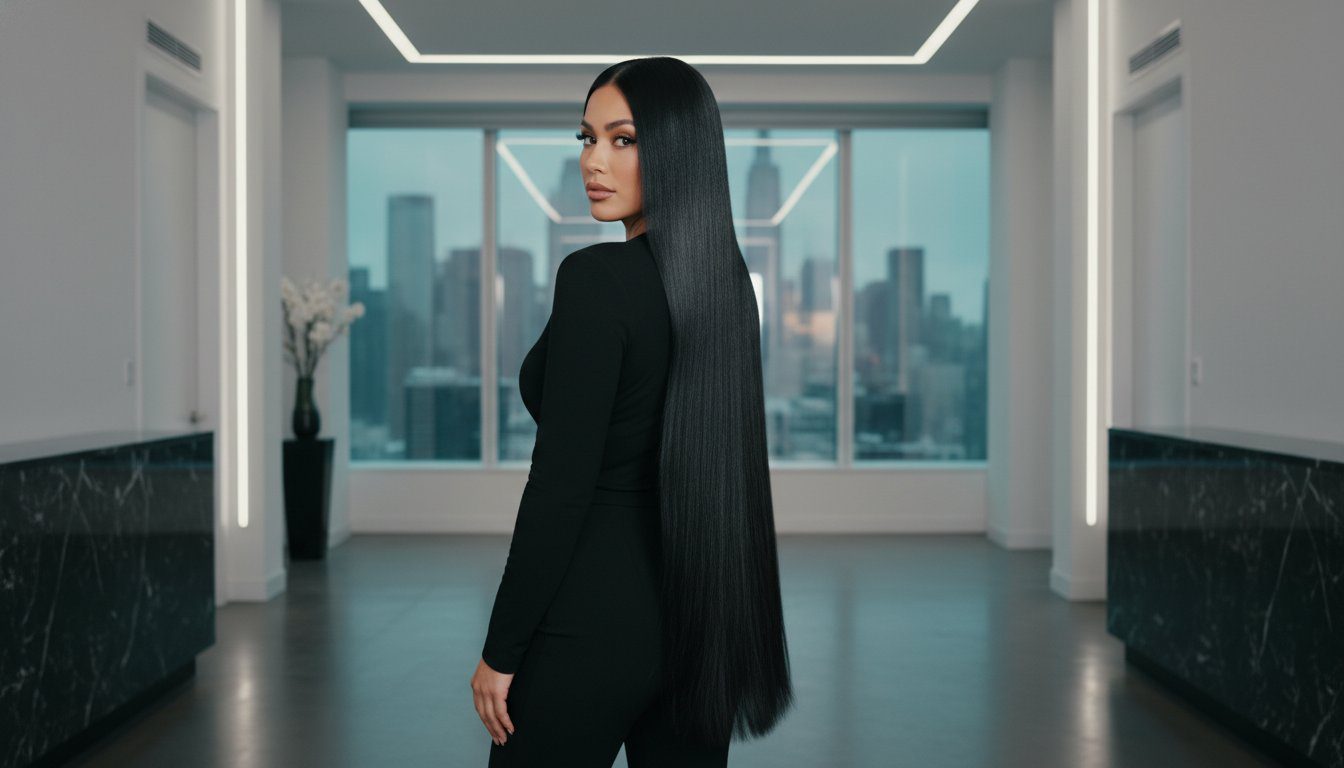
That sleek, glass-like finish you just paid for can be ruined by a single elastic band. If you’re wondering, “can you tie your hair after hair botox,” the short answer is that patience is your best styling tool. We understand the struggle of keeping your strands down when the humidity hits or you’re heading to the gym. You’ve invested in a treatment that fills in damaged hair fibers to create a smooth, hydrated look, and the fear of creating a permanent dent is completely valid.
The secret to hair botox longevity in 2026 lies in the gradual transition from loose hair to tension-free styling. You’ll learn exactly how long to wait during the critical 72-hour setting phase to prevent creases and ensure your results stay frizz-free for up to three months. We’ll also clarify the differences between keratin and botox rules so you don’t use the wrong aftercare techniques. This guide covers which hair ties are safe to use and how to incorporate products like our Keratin Care Shampoo to maintain that signature shine. You’re about to master the setting process for a flawless finish.
Key Takeaways
- Observe the 72-hour “Zero Tension” window to allow proteins and lipids to fully settle into the hair cortex without interruption.
- Learn why asking can you tie your hair after hair botox is crucial for preventing the “memory” effect that causes permanent styling creases.
- Transition safely after the first three days by using silk scrunchies or soft clips that reduce friction and mechanical stress on the strands.
- Discover how to protect your sleek results from sweat and humidity in challenging environments like New York City or South Florida.
- Maintain your investment for up to three months by switching to sulfate-free formulas like Keratin Care Shampoo and Conditioner.
Can You Tie Your Hair After Hair Botox? The Golden Rule
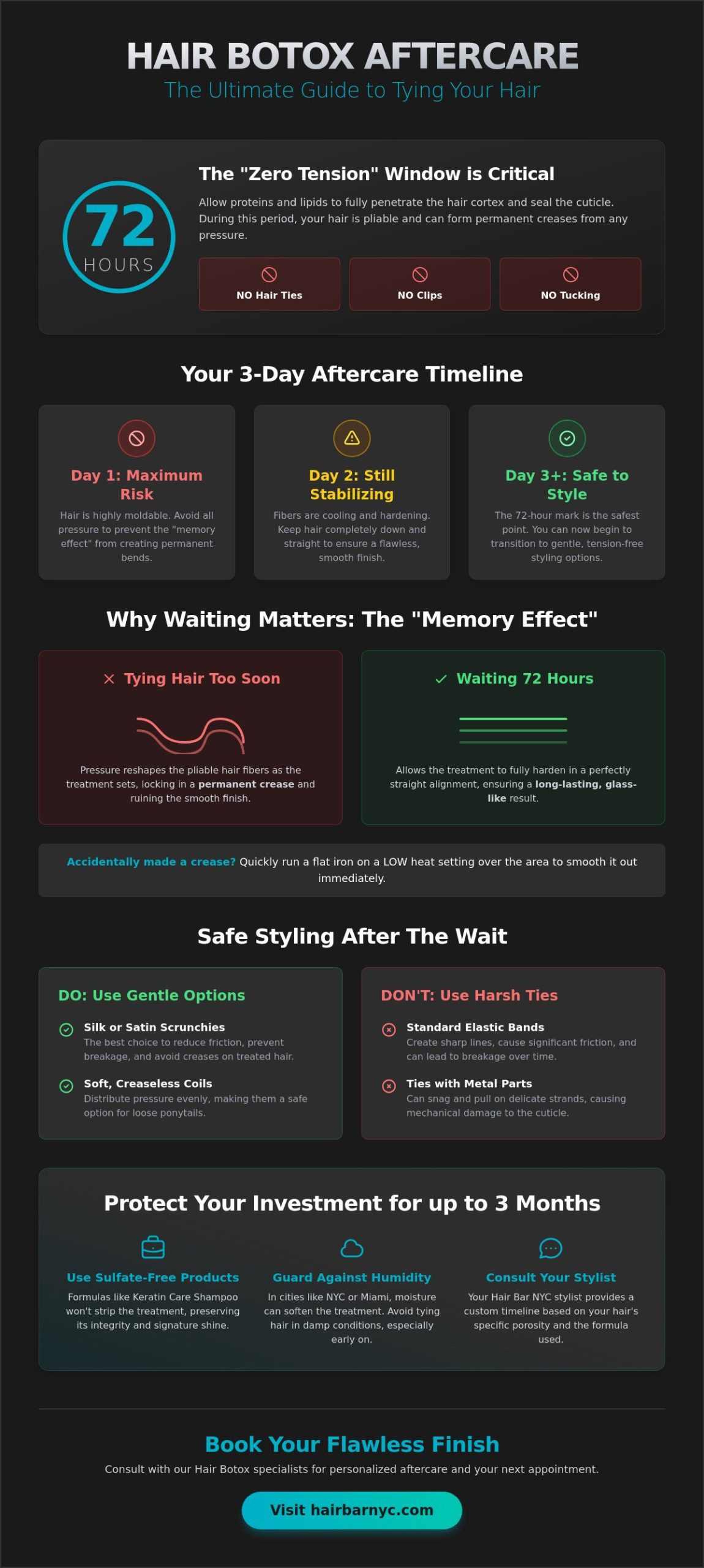
The most pressing question for many clients is: can you tie your hair after hair botox? While your hair looks glossy and finished the moment you leave the salon chair, the internal structure of your strands is still in a delicate, pliable state. The golden rule for aftercare is to wait between 48 and 72 hours before using any hair ties, clips, or even tucking your hair behind your ears. This window is critical because the treatment needs time to fully penetrate the hair cortex and seal the cuticle without any outside interference.
If you’re still wondering if can you tie your hair after hair botox on day one, the answer is a firm no. During the first 24 hours, your hair fibers are highly susceptible to what stylists call the “memory effect.” Because the proteins and lipids haven’t fully set, any pressure from an elastic band can create a permanent indentation or “bend” in the hair. This mechanical stress doesn’t just ruin the aesthetic; it can lead to localized breakage where the band creates friction against the softened cuticle.
The 48-Hour No-Tension Window
Your hair fibers need time to cool and stabilize after the heat-sealing process used during the application. Think of the treatment like wet cement; it’s in the right place, but it hasn’t hardened into its final form yet. Even a loose tuck behind the ears can leave a lingering wave that disrupts the smooth results you desire. Keeping your hair completely down and straight during this time ensures that the smoothing agents seal in a perfectly vertical alignment. If you accidentally create a crease, don’t panic; quickly run a flat iron over the section on a low heat setting to smooth it back out.
Hair Botox vs. Keratin: Styling Differences
Many people confuse hair botox with traditional Brazilian hair straightening or keratin treatments. While both aim for smoothness, hair botox is generally more forgiving because it’s usually formaldehyde-free and focuses more on deep hydration than chemical bond restructuring. This lack of harsh chemicals often means the setting time is slightly more flexible, but the 72-hour rule remains the safest bet for maximum longevity.
Every hair type reacts differently to the infusion process. It is always best to consult with your Hair Bar NYC stylist to receive a customized timeline based on your specific hair porosity and the Hair Botox formula used. They can determine if your hair requires the full three-day wait or if you can transition to loose styles sooner. By respecting this initial setting phase, you protect your investment and ensure your hair remains frizz-free for months.
Why Tying Your Hair Too Soon Can Ruin Your Results
Understanding the science behind your treatment is the best way to answer the question: can you tie your hair after hair botox? When our stylists apply the treatment, we infuse your hair with a potent blend of proteins, lipids, and vitamins. These ingredients don’t just sit on the surface; they penetrate the hair cortex to fill in damaged areas. The final flat-ironing step at the salon “melts” these nutrients into place. This process leaves your hair in a temporarily moldable, almost plastic state. If you apply pressure with a hair tie during this cooling phase, you aren’t just styling your hair; you’re physically reshaping the treatment as it hardens.
External factors in high-humidity areas like New York City or Miami can complicate this setting process. Moisture in the air naturally swells the hair cuticle. If you’re commuting through Manhattan or walking along a beach in Florida, that ambient humidity can soften the treatment before it has fully cured. Tying your hair up in these conditions creates a “steam effect” under the hair tie, which significantly increases the risk of a deep, stubborn dent. Unlike traditional keratin treatments, which often rely on stronger chemicals as detailed by the FDA on formaldehyde in hair products, our hair botox uses a more nourishing approach that requires a gentle touch during the first 72 hours.
Understanding Indentation and Creasing
During the first few days, your hair’s plasticity is at its peak. A temporary crease from a quick ponytail might seem harmless, but it can actually lead to a long-term texture change in that specific section. If the treatment sets while the hair is bent, that wave becomes part of your hair’s new structure for the next few months. Cuticle memory is the hair’s tendency to retain the shape it held while the treatment’s nourishing compounds were cooling and solidifying within the fiber. To keep your strands perfectly straight, you must avoid any accessories that disrupt the vertical alignment of the cuticle.
Friction and the Risk of Breakage
Mechanical stress is the hidden enemy of a fresh treatment. Because the hair is saturated with a deep conditioning formula, it’s actually more elastic and “soft” immediately after the service. Pulling it into a tight bun or using a standard rubber band creates intense friction. This tension can cause the hair to snap or fray, especially around the mid-lengths where the tie sits. Using professional-grade accessories later in the week is fine, but early tension reduces the longevity of the smoothing effect. For the best results, we recommend starting with a professional Hair Botox session and strictly following the no-tension rule to keep your hair healthy and strong.
The 72-Hour Timeline: When and How to Safely Put Your Hair Up
Navigating the days following your salon visit requires a strategic approach. If you’re wondering exactly when can you tie your hair after hair botox, following a phased timeline is the most reliable method to protect your smooth finish. While the treatment is deeply nourishing, the first three days are when the internal structure is most susceptible to change.
- Day 1 (0-24 Hours): The Zero Tension Phase. Your hair should remain completely loose. Avoid even tucking it behind your ears or resting sunglasses on your head. This is the most vulnerable period for your strands.
- Day 2 (24-48 Hours): The Soft Clip Phase. If you must move hair away from your face, use a flat, creaseless clip. These accessories distribute pressure evenly rather than pinching a single spot.
- Day 3 (48-72 Hours): The Gentle Tie Phase. You can begin using large silk scrunchies for very loose low ponytails. The goal is still to minimize any sharp bends in the hair fiber.
- Day 4 and Beyond: Normal Styling. Once you’ve reached the 72-hour mark, the treatment has fully cured. You can return to your signature NYC or Miami styles, whether that’s a sleek high pony or an intricate braid.
Many clients choose hair botox because it’s a safer, more hydrating alternative to traditional chemical straighteners. Unlike the harsh substances often highlighted in Harvard research on hair relaxers, botox focuses on repair. However, this reparative state means the hair is “soft” while it heals, making the 72-hour timeline essential for success.
Safe Styling Alternatives for the First 3 Days
You don’t have to let your hair get in the way of your daily routine. Large silk scrunchies are a lifesaver because they don’t have the internal elastic tension of standard ties. If you’re doing your makeup, use creaseless clips to hold back face-framing pieces without leaving a mark. For those in humid climates, a loose silk scarf can keep hair off your neck without creating the tight compression of a hair tie. If you’re unsure which accessories are best, our team at Hair Bar NYC can recommend professional-grade options during your appointment.
What to Avoid: The “Do Not Use” Accessory List
To keep your results flawless, certain items must stay out of your hair for at least 72 hours. Standard rubber bands and thin elastics are the primary offenders; they create high-intensity pressure points that lead to permanent dents. Avoid tight metal barrettes or claw clips with sharp teeth, as these can scrape the cuticle while it’s still setting. High-tension ponytails or intricate braids are also off-limits. These styles pull on the hair roots and distort the uniform pattern the treatment is trying to establish. If you’re asking can you tie your hair after hair botox with these items, the answer is a definitive no until the setting window has closed.
Managing Your Hair Botox in NYC & Miami Humidity
Living in high-humidity hubs like NYC or Miami presents a unique challenge for post-treatment care. The air in Boca Raton or South Beach is often saturated with moisture, which can make your hair feel heavy or sticky against your neck. You might feel a desperate urge to bundle it up, but you should still ask yourself: can you tie your hair after hair botox during these peaks of humidity? The answer remains no. Moisture acts as a catalyst that can soften the treatment’s seal, making your hair even more prone to indentations if it’s held under the tension of an elastic.
NYC commuters face their own set of hurdles. Between the sweltering heat of a subway platform and the risk of a sudden rain shower, keeping your hair perfectly dry and down is a task. If you get caught in a drizzle or start to sweat during your commute, don’t reach for a hair tie. Instead, find a climate-controlled area as soon as possible. If your hair becomes damp, use a blow dryer on a cool or low-heat setting to gently dry the strands while brushing them straight. This prevents the hair from setting in a frizzy or wavy pattern while the treatment is still in its 72-hour curing phase.
The “gym dilemma” is another common concern for our active clients. If you’re asking can you tie your hair after hair botox before your morning run, the safest answer is to stick to low-impact movement or use a wide, silk-lined headband. This keeps hair off your face and absorbs sweat at the hairline without the crushing pressure of a traditional tie. For more localized advice on managing your specific hair type in these climates, visit one of our Hair Bar NYC locations to speak with a professional.
Strategies for High-Humidity Environments
Staying in a climate-controlled environment for the first 48 hours is the most effective way to ensure your hair botox sets perfectly. Air conditioning removes excess moisture from the air, which helps the proteins and lipids in the treatment solidify without interruption. If you must go outside, a silk-lined headband is your best friend. It absorbs moisture without creating a crease, unlike cotton or synthetic bands that can cause friction. Our stylists can help you plan your aftercare around your local weather and lifestyle.
The Best Way to Sleep After Hair Botox
Your aftercare doesn’t stop when you go to bed. A silk or satin pillowcase is a necessity, not a luxury, during the first week. These materials allow your hair to glide across the surface, reducing the overnight friction that causes frizz and tangles. You should never go to sleep with a ponytail or bun after your treatment. If you find it impossible to sleep with your hair loose, you can use the “pine-apple” method. This involves using a large silk scrunchie to very loosely gather your hair at the very top of your head. It should be so loose that it feels like it might fall out, ensuring no pressure is applied to the mid-shaft. Ready for your transformation? Book your Hair Botox appointment today and let our experts guide you through the process.
Ensuring Your Treatment Lasts: Professional Maintenance
Once you’ve cleared the 72-hour hurdle, you finally know the answer to can you tie your hair after hair botox is a relieved yes. However, the work doesn’t end there. Maintaining that vibrant, frizz-free look for the full two to four months requires a disciplined aftercare routine. The chemicals in standard shampoos can act like sandpaper on your newly smoothed cuticles, quickly stripping away the nourishing vitamins and collagen. To protect your investment, you must switch to formulas that are both sulfate-free and sodium chloride-free.
Sodium chloride, or common salt, is a hidden ingredient in many drugstore “sulfate-free” options. It’s used as a thickener, but it effectively dissolves the hair botox coating. This leads to premature frizz and a loss of shine. Using a Deep Conditioning Mask once a week is another non-negotiable step. It replenishes the moisture that daily styling and environmental factors in NYC and Miami take away. This extra layer of hydration ensures that when you do decide to put your hair up, the strands remain resilient and bounce back without any lingering marks.
Recommended Aftercare Products
We recommend using the Silk Touch Keratin Care line for botox maintenance. These professional products are specifically formulated to be compatible with our smoothing treatments. Unlike generic brands, they contain high-grade proteins that reinforce the treatment rather than stripping it. A leave-in conditioner is also vital. It provides a “slip” to the hair that prevents post-tie tangles and mechanical damage when you transition between styles. If you’re still asking can you tie your hair after hair botox without damaging it, the answer depends heavily on the quality of the products you use at home.
When to See Your Stylist
The effects of hair botox typically last between two and four months, depending on your hair type and how well you follow the aftercare rules. You’ll know it’s time for a “top-up” when you notice your natural texture returning or if your hair feels more porous and difficult to manage. For most clients, scheduling a touch-up session every three to four months is the best way to maintain consistent results. If you find your hair needs even more intense smoothing and volume control, you might consider transitioning to a full Silk Touch Keratin Treatment during your next visit. Ready to refresh your look? Book your next smoothing session at Hair Bar NYC and let our experts restore your hair’s youthful glow.
Master Your Post-Botox Styling Routine
Achieving the hair of your dreams is only half the battle; protecting it during the first few days is what ensures long-lasting results. You now have the definitive answer to can you tie your hair after hair botox and understand why the 72-hour setting phase is non-negotiable. By prioritizing loose styles and transitioning to silk accessories, you prevent the mechanical stress that leads to unwanted creases. Maintaining your look with professional sulfate-free products will keep your strands hydrated and smooth for up to four months.
With over 10 years of smoothing treatment expertise, our stylists use a specialized Silk Touch formaldehyde-free formula to deliver premier results. Whether you’re visiting our NYC or Miami salon locations, we provide the precision care your hair deserves. Don’t leave your aftercare to chance. Book Your Hair Botox Appointment at a Hair Bar NYC Near You and enjoy the confidence of flawlessly smooth, healthy hair today.
Frequently Asked Questions
Can I use a claw clip after hair botox?
You should avoid using claw clips for the first 72 hours after your treatment. The teeth of a claw clip create concentrated pressure points that can leave permanent marks in the hair fiber while it’s still pliable. Once the setting window has passed, you can return to using clips, but choosing those with smooth surfaces will help maintain your frizz-free results for the full three months.
What happens if I accidentally tied my hair too soon?
If you accidentally tie your hair too soon, you might notice a dent or crease where the elastic sat. Don’t panic; you can often fix this by quickly running a flat iron over the affected section on a low heat setting. This re-smooths the cuticle before the “memory effect” becomes permanent. It’s best to address any accidental bends immediately to preserve the sleek finish of your treatment.
Can I wear a hat or headband after hair botox?
It’s best to avoid hats and tight headbands during the first three days of aftercare. These items trap sweat and scalp oils, which can interfere with the way the treatment seals into the hair shaft. If you are in a high-humidity area like NYC or Miami, a hat can create a “sauna effect” that leads to premature frizz. Stick to keeping your hair loose and open to the air.
Is it okay to put my hair behind my ears?
Tucking your hair behind your ears is a common habit, but you should avoid it for at least 48 hours. Even this minor amount of pressure can create a lingering wave in the face-framing sections of your hair. To ensure your results remain perfectly straight, keep your hair draped forward. This prevents the treatment from setting in a curved shape around your ears during the critical curing phase.
How long does hair botox actually take to set?
Hair botox requires a full 72 hours to completely set and stabilize within the hair cortex. While the flat-ironing process at the salon seals the initial treatment, the proteins and lipids continue to settle over the next few days. This is why the answer to can you tie your hair after hair botox is a firm no until day four. Patience during this time ensures your hydrated, smooth results last.
Can I braid my hair 24 hours after the treatment?
You should not braid your hair 24 hours after the treatment because the hair is still too moldable. Braiding creates a repetitive, tight pattern that the hair will likely retain once the treatment fully cures. If you braid it too early, you’ll end up with a crimped texture that defeats the purpose of a smoothing service. Wait until the 72-hour mark before trying any braided styles.
What are the best hair ties for botox-treated hair?
The best hair ties for treated hair are large silk scrunchies or telephone-cord style ties. These accessories are designed to hold the hair without creating a single, sharp pressure point. Silk is especially helpful because it reduces friction, preventing the breakage that can occur when traditional rubber bands pull on the hair. Investing in quality accessories helps maintain the integrity of your treatment and prevents mechanical damage over time.
Can I use dry shampoo if I need to keep my hair down but it feels oily?
You can use dry shampoo if your hair feels oily during the initial 72-hour period. Choose a lightweight, professional formula that doesn’t leave heavy buildup. This is a great strategy for those who struggle with the “no-wash” rule in humid climates. It allows you to keep your hair looking fresh and down without needing to reach for a hair tie or wash it before the treatment has fully set.
Related posts

Balayage Artistry in 2026: The Ultimate Guide for NYC & South Florida
Did you know that switching from traditional foils to hand-painted artistry could save you up to four salon visits every single year? While the...
Full vs. Partial Highlights: The 2026 Guide to 360-Degree Hair Dimension
What if the reason your ponytail looks flat isn't your styling technique, but your color placement? It's common to feel stuck in the full vs partial...

Hair Botox vs. Keratin: Which Smoothing Treatment Is Right for You in 2026?
What if the secret to achieving that coveted glass-hair shine isn't a harsh chemical straightener, but a restorative "filler" that strengthens your...